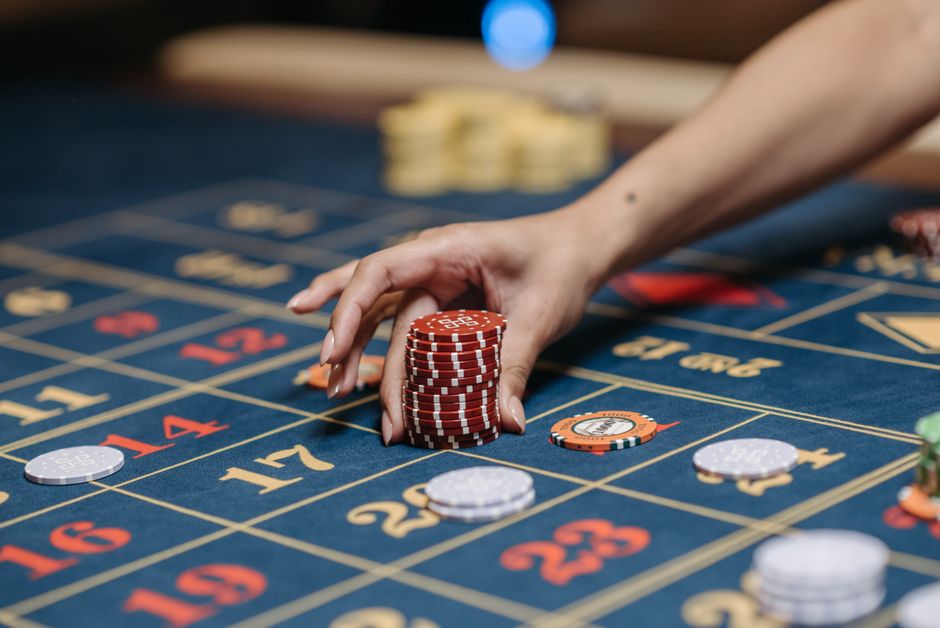
Ask ten people what iGaming means and you'll get ten different answers. To a slots player in Stockholm, it's the thrill of a bonus round landing on a Friday night. To a poker grinder in São Paulo, it's a six-table session at 2 a.m. To a sports bettor in Lagos, it's carefully tracking Asian handicap lines before kickoff. The common thread? Interactive wagering has quietly become one of the most sophisticated entertainment industries on the planet, worth well over $100 billion annually and still growing at a double-digit clip in most regulated markets.
But here's the thing most articles gloss over: the experience of playing online has changed dramatically in the last five years. Faster payments, AI-driven game recommendations, live dealers streamed in 4K, and a wave of regulation that has reshaped who can play what and where. If you're going to spend real money on this stuff, you owe it to yourself to understand how the machinery actually works.
Online slots are the undisputed volume kings of iGaming, accounting for roughly 60-70% of casino revenue in most markets. That popularity hides real complexity. Modern video slots aren't just spinning reels; they're software products built on random number generators (RNGs) that are tested and certified by independent labs like eCOGRA, iTech Labs, and GLI.
The number that matters most is RTP, or return to player. A slot advertised at 96% RTP is designed to pay back 96 cents for every euro wagered over millions of spins. The remaining 4% is the house edge. Volatility is the other variable worth understanding:
A common mistake is chasing jackpots on a freshly depleted bankroll. Slot math doesn't care how long you've been losing. Every spin is independent. If you want to actually enjoy the session, decide your budget before you open the game, not after the third bonus round misses. More background can be found at dana slot.
Poker remains the most intellectually honest game in the iGaming ecosystem. The house doesn't compete with you; it just takes a rake, usually between 2.5% and 5% of each pot, capped at a few dollars in cash games. Everything else is player versus player.
The modern online poker landscape has shifted significantly. Once dominated by a handful of mega-sites, the market now spans regulated networks, regional operators, and apps that let you play micro-stakes from your phone. Three formats cover most of the action:
If you're new, don't blow your first deposit on $5/$10 cash tables. Start at micro-stakes, study preflop ranges, and use a HUD or tracker if the site allows it. Poker rewards patience far more than aggression at the entry level.
Sportsbooks operate on a simple principle: price every outcome slightly in their favor. If a tennis match has two roughly equal players, you'll often see odds of 1.90 and 1.90. That implies a 105% total probability, which means the bookmaker's margin — the vig or juice — is about 5%. Sharp bettors hunt for markets where that margin drops to 2-3% or less.
Where you place the bet matters as much as what you bet on. A regulated EU bookmaker might offer 1.95 on a Premier League favorite, while a grey-market operator lists 2.02 for the same selection. Over 500 bets, that difference is enormous. It's why line shopping, spreading your bankroll across two or three accounts, is one of the few genuinely free edges in this hobby.
Bankroll management deserves its own rulebook. A reasonable starting framework:
The iGaming industry is only as trustworthy as its regulators. The UK Gambling Commission, Malta Gaming Authority, Gibraltar Licensing Authority, and a growing list of US state boards (New Jersey, Pennsylvania, Michigan) enforce strict rules on player funds, dispute resolution, and game fairness. If a casino or sportsbook doesn't display a license from at least one recognized authority, close the tab.
Also check the withdrawal terms. Some operators advertise a 100% welcome bonus but attach a 40x wagering requirement, meaning you'd need to bet $4,000 before cashing out $100 of bonus money. Bonus fine print is where new players lose the most value, and it's where experienced players spend five minutes before depositing a cent.
iGaming at its best is entertainment with a transparent cost. The RTP on the slot is set. The rake on the poker table is published. The margin on the sportsbook is baked into the odds. None of it is a secret, and none of it is a scam — as long as you're playing on a licensed platform and treating the money you wager as money you can afford to lose.
What separates players who enjoy this world for decades from those who burn out in a month isn't luck. It's discipline: a fixed budget, an understanding of the math, and a willingness to walk away when the session stops being fun. Master that, and every other skill in slots, poker, and betting becomes a bonus rather than a requirement.

Every gambler has heard the cliché: the house always wins. It's repeated at blackjack tables, in casino forums, and...

How to walk through British villages and farmland without causing offence: gates, livestock, driveways, rights of...

A first-timer's guide to the South West Coast Path: reading tides, staying safe near cliff edges, judging distances...

Exploring paths, places, and stories of rural Britain..
